Why we shoot every twilight on-site.
It would be faster to fake. Faster, cheaper, and — at a glance — indistinguishable from a real golden-hour shot. We don't. Here's what we lose if we do.

The pitch for synthetic twilight is easy to understand. You shot the property at 2pm under a flat sky. The agent wants the listing live this afternoon. Modern editing tools can fake a sunset behind the house in about ninety seconds — pull a stock sky, color-grade the foreground to match, drop in some warm window light, done. Nobody scrolling listings is going to know.
And that's exactly the problem.
The first showing is the moment of truth.
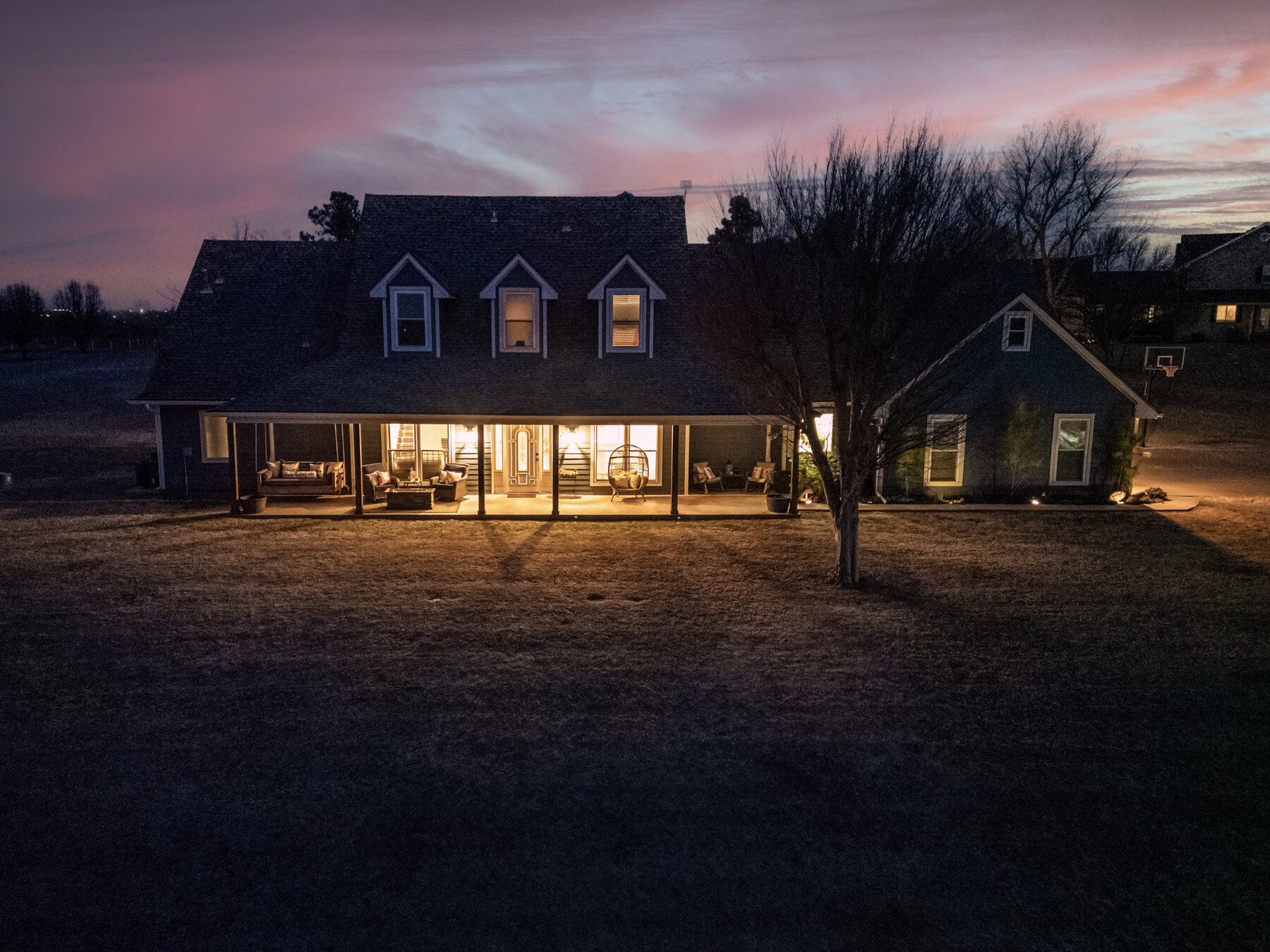
When a buyer drives up to a property they fell in love with online, the gap between the listing photos and the actual house is the thing that decides whether they walk in interested or already disappointed. A real twilight shot tells the buyer something true: that on a particular evening, this house looked this way. The synthesized version tells them a story that the property itself can't back up. The listing was a promise. The visit is the receipt.
Twilight is a particularly bad place to fake it, because twilight is also the most aspirational frame in real estate. It's the shot agents put first in the gallery and lead with on the social post. It's the photo that sets expectations. If it's invented, every other photo is now suspect.
What real twilight actually requires.
The honest version costs more in time, not money. The window of usable light at blue hour is roughly fifteen to twenty-five minutes, depending on the season and cloud cover. To shoot a property at twilight, the photographer has to:
- Be on-site, set up, and ready before the sun crosses the horizon.
- Have already finished the interior and daylight exterior shots, or be willing to return on a second visit.
- Get every interior light in the house turned on, every exterior fixture too, and shade pulls in the position the agent wants for the listing.
- Bracket exposures hard, because the dynamic range between interior bulb warmth and sky cyan is brutal.
- Accept that weather will sometimes kill the shot and reschedule, costing both photographer and agent a return trip.
It's a real production. You can see why an editor offering "AI Twilight" for an extra $15 per listing is appealing.
The market is already losing confidence in what it sees. Faking the most aspirational frame in the gallery is accelerating that, not slowing it down.
What we do instead.
Every twilight on the deliverable list gets booked as its own short window, usually appended to a same-day interior shoot. The agent knows in advance whether the weather looks workable. If it doesn't, we reschedule rather than fabricate. The cost is on us in lost flexibility, not on the listing in lost truth.
The trade-off is real. We deliver fewer twilights than a shop that fakes them. The ones we deliver have a different quality — partly because the light is genuine, partly because the photographer was actually standing there, deciding the frame, watching how the house wears the moment. There's no synthesizer for that.
If a buyer ever drives past one of our listings at the same hour we shot it, the house should look familiar. That's the standard. That's the whole job.
Kennith Wheeler
Chickasha, Oklahoma